
Outdoor Spaces Built for Daily Use
Siding Installation & Replacement in Johns Creek
Composite decking offers a durable, low-maintenance alternative to traditional wood, making it an increasingly popular choice for outdoor living spaces in Johns Creek and Dunwoody, GA. With Georgia’s humid subtropical climate, frequent rain, and extreme summer heat, standard wood decks often struggle with issues like rotting, splintering, warping, fading, and constant maintenance requirements such as sanding and staining. Composite materials are engineered to withstand these conditions while maintaining a clean, finished appearance year after year.
Jordan Carpentry & Siding installs Trex composite decking systems throughout Johns Creek, Dunwoody, and surrounding North Metro Atlanta communities. Trex decking is manufactured using a blend of recycled wood fibers and plastic polymers, creating a strong, weather-resistant surface that resists moisture absorption, mold growth, insect damage, and surface decay. Unlike traditional lumber, composite boards are designed to maintain their shape and color with minimal seasonal expansion and contraction, helping preserve a consistent, finished look over time.
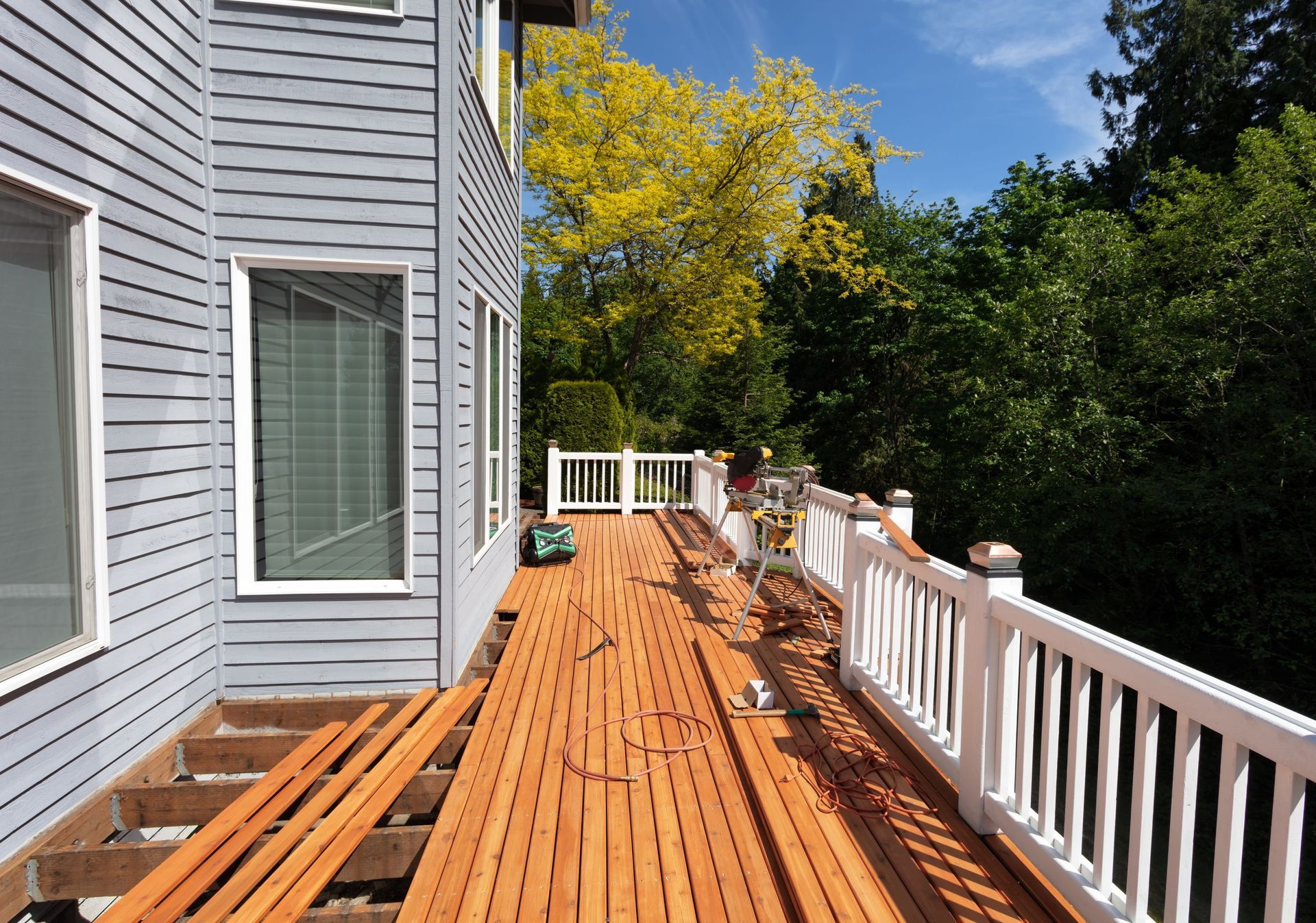
Every composite deck installation includes proper structural framing that meets local building codes, secure fastening systems, and precise board placement for clean lines and long-term performance. Depending on the product line, boards may feature hidden fastening systems for a smooth, screw-free surface. This results in a more modern appearance while improving safety and reducing maintenance needs.
In Johns Creek, where high humidity and sudden storms are common, composite decking provides a reliable solution for homeowners who want a long-lasting outdoor space without the ongoing upkeep of wood.
Schedule a property evaluation to review your existing deck condition and explore Trex composite decking options suited for your outdoor living space in Johns Creek or Dunwoody, GA.
What Proper Composite Installation Requires
Framing must be level and spaced according to the manufacturer's specifications, as composite boards have different load-bearing characteristics than wood. The substructure typically uses pressure-treated lumber or composite framing members, with joists positioned to support the decking without flexing underfoot. Fasteners designed for composite materials prevent the staining and surface damage that standard screws can cause when they react with moisture or tannins in the material.
Once installation is complete, you'll notice a surface that remains cool enough to walk on barefoot even in direct sunlight, unlike composite products from earlier generations that retained heat. Jordan Carpentry & Siding uses Trex boards with protective shells that resist fading and staining, so spilled drinks, pollen, and mildew wash away with soap and water rather than requiring pressure washing or chemical treatments. The surface won't splinter or crack, which makes it safer for children and pets who use the deck frequently.
Trex decking comes in multiple color lines and grain patterns, from solid tones to wood-look finishes that replicate the appearance of natural timber without the maintenance burden. Railing systems are available in matching or contrasting colors, with options for aluminum inserts, cable rails, or traditional balusters. The boards are backed by warranties that cover material defects and fading, though specific coverage terms depend on the product line selected.
Questions You Might Have Before You Start
Homeowners in Johns Creek often ask about the installation process and how composite materials perform in Georgia's climate before moving forward with a deck replacement.
How does composite decking handle Johns Creek's humidity and seasonal temperature changes?
Trex boards are engineered to resist moisture absorption, so they don't swell, warp, or develop mold the way untreated wood does when exposed to high humidity and frequent rain throughout spring and summer.
What preparation is required before composite boards can be installed?
The existing deck structure is evaluated to determine if framing members need replacement or reinforcement, as composite decking requires joists spaced according to manufacturer standards to prevent flexing or sagging over time.
How long does a composite deck last compared to wood?
Trex composite decking typically lasts twenty-five years or more without requiring staining, sealing, or board replacement, while pressure-treated wood decks often need significant repairs within ten to fifteen years due to moisture damage and surface degradation.
What maintenance does composite decking require after installation?
You'll need to sweep debris regularly and wash the surface with soap and water a few times per year to remove pollen and dirt, but no sanding, staining, or sealing is necessary to maintain the material's appearance and structural integrity.
Jordan Carpentry & Siding has installed composite decks throughout Johns Creek and Dunwoody, GA, for homeowners who want outdoor space that doesn't demand constant upkeep. If you're ready to move forward or want to compare material options, contact us to schedule a consultation and get a free estimate.