
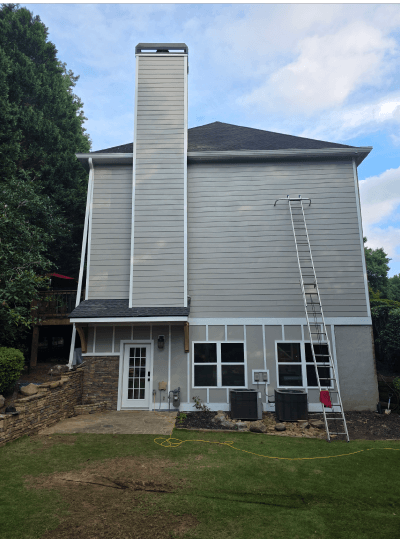
Exterior Protection Built to Last Decades
Siding Installation & Replacement in Johns Creek
When water infiltrates exterior walls or existing siding shows visible warping, new siding installation stops moisture damage before it reaches structural framing. Jordan Carpentry & Siding handles siding installation across Johns Creek and Dunwoody, working with properties where aging exteriors compromise thermal efficiency or where builders left homes vulnerable to Georgia's humid subtropical climate. You'll notice immediate improvements in how your home sheds water during the region's frequent afternoon thunderstorms.
Siding installation involves removing compromised exterior materials down to the sheathing layer, inspecting for hidden moisture damage, installing weather-resistant barriers, and mounting new siding panels with proper overlap and fastener placement to prevent wind-driven rain penetration. The process addresses not just visible deterioration but underlying vulnerabilities that allow moisture to migrate behind the exterior envelope.
Schedule a property evaluation to assess your current exterior condition and material options.
Installation begins with sheathing inspection to identify any wood rot or mold growth that developed behind old siding, since mounting new materials over compromised substrate leads to recurring problems within months. The underlayment layer determines how effectively your exterior manages moisture vapor—proper installation includes sealing seams and flashing integration around windows and roof junctions where water typically finds entry points.
After installation completes, you'll see clean sightlines with consistent panel alignment and uniform reveal spacing that signals proper fastening tension. Jordan Carpentry & Siding ensures caulk joints remain flexible rather than brittle, which prevents cracking when materials expand during Georgia's summer heat cycles. Water will sheet off the surface instead of pooling along seams or penetrating at corner transitions.
The installation includes starter strips at the foundation line, J-channel around openings, and soffit integration at the roofline. It does not include structural repairs to wall framing or insulation upgrades unless specifically contracted. Your material choice affects maintenance frequency—vinyl requires minimal upkeep while fiber cement demands periodic repainting but offers superior impact resistance.
Homeowners preparing for exterior upgrades often want to understand the installation process and how different materials perform in this climate.
What happens to the existing siding during installation?
The old siding is removed completely along with trim pieces, and the underlying sheathing is inspected for moisture damage or structural issues that need repair before new materials go up.
How does Georgia's humidity affect siding material choices?
High humidity levels in Johns Creek mean vapor permeability matters—materials need to allow interior moisture to escape while blocking exterior water, which is why proper underlayment selection and fastener spacing are critical to preventing trapped moisture and mold growth.
When is the best time to schedule siding installation?
Fall and spring offer moderate temperatures that allow materials to acclimate properly and adhesives to cure at optimal rates, though installation can proceed year-round with appropriate adjustments for temperature extremes.
What material thickness should I look for?
Residential siding typically ranges from 0.040 to 0.046 inches for vinyl and 5/16 to 7/16 inches for fiber cement—thicker gauges resist impact damage and maintain rigidity across wider spans between studs.
How long does a complete installation take?
Most single-family homes require five to ten days depending on square footage and architectural complexity, with additional time needed if sheathing repairs or structural corrections are discovered during removal.
Jordan Carpentry & Siding works throughout Johns Creek and Dunwoody on properties where exterior protection needs replacement or upgrade. Request a detailed estimate based on your home's square footage and current condition to understand material options and installation timelines specific to your property.